


Certification required
OW
 SeaLog
Philippines · advanced
A submerged seamount with its top at 12 m and its flanks at 200: threshers on the cleaning stations at dawn, hammerheads if the season is kind.
Kimud Shoal is a sunken island east of Malapascua, in Leyte waters at the edge of the Visayan Sea. Its summit sits at about 12 m - some operators give the plateau as 12 to 23 m - and its sides fall away past 200 m. Boats run about sixty minutes and leave in the dark, between roughly 05:00 and 08:00, because the whole dive is built around the dawn window when pelagic thresher sharks come up to the cleaning stations on top of the shoal. Since 2022 operators report the threshers appearing at Kimud more often than at Monad Shoal, with shallower and closer encounters.
The other reason to be here is scalloped hammerheads. They school in the blue off the mound during the winter months, and the season is variously given as November to February or December through April or May, with historic reports of schools of well over a hundred animals towards the end of it. Be honest with yourself about the odds: Malapascua operators now say plainly that hammerheads are very occasional and never guaranteed, and that you should not come expecting them. Occurrence records for the shoal are overwhelmingly pelagic thresher, with whitetip reef shark and an ordinary reef list behind it.
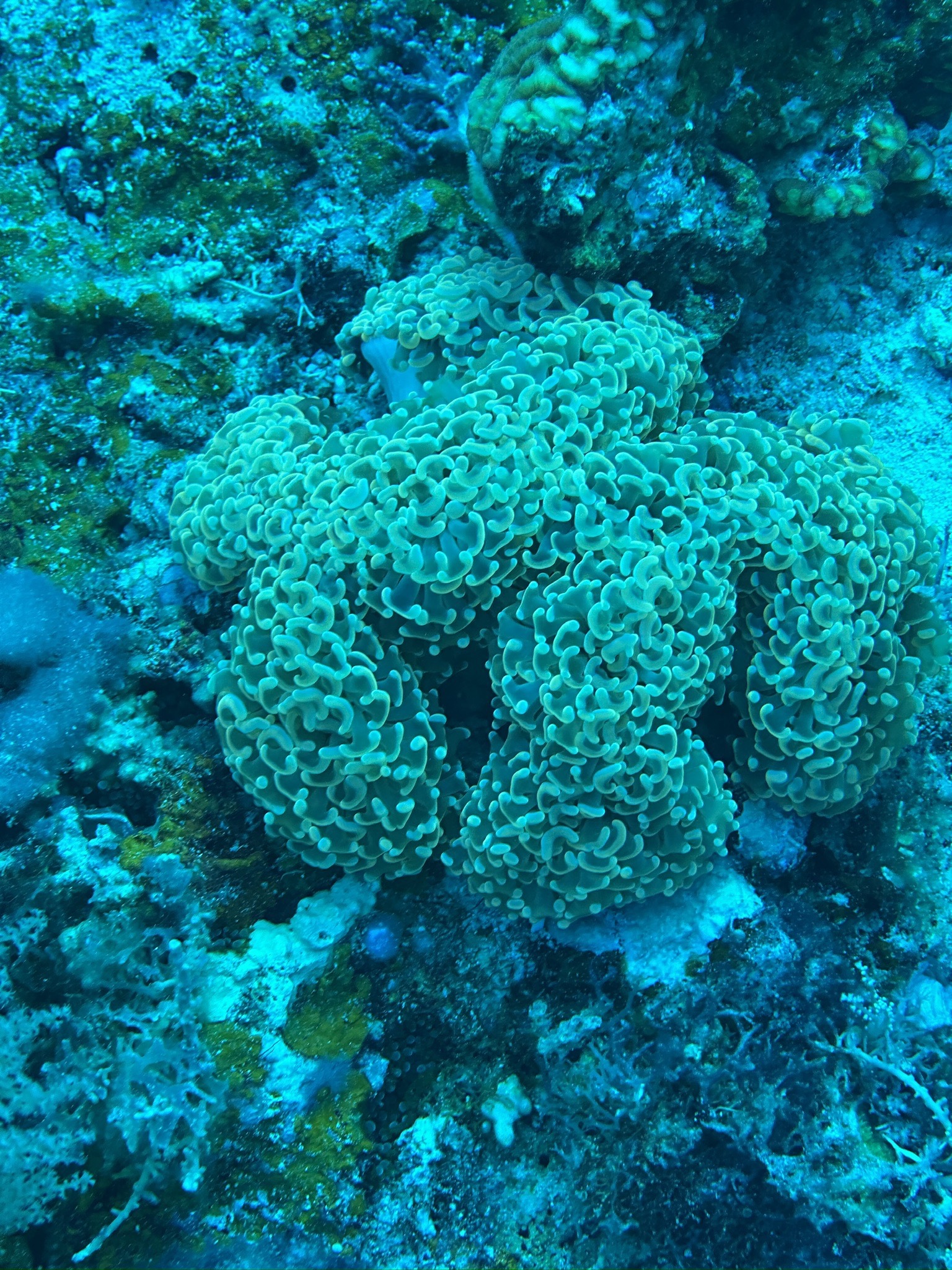
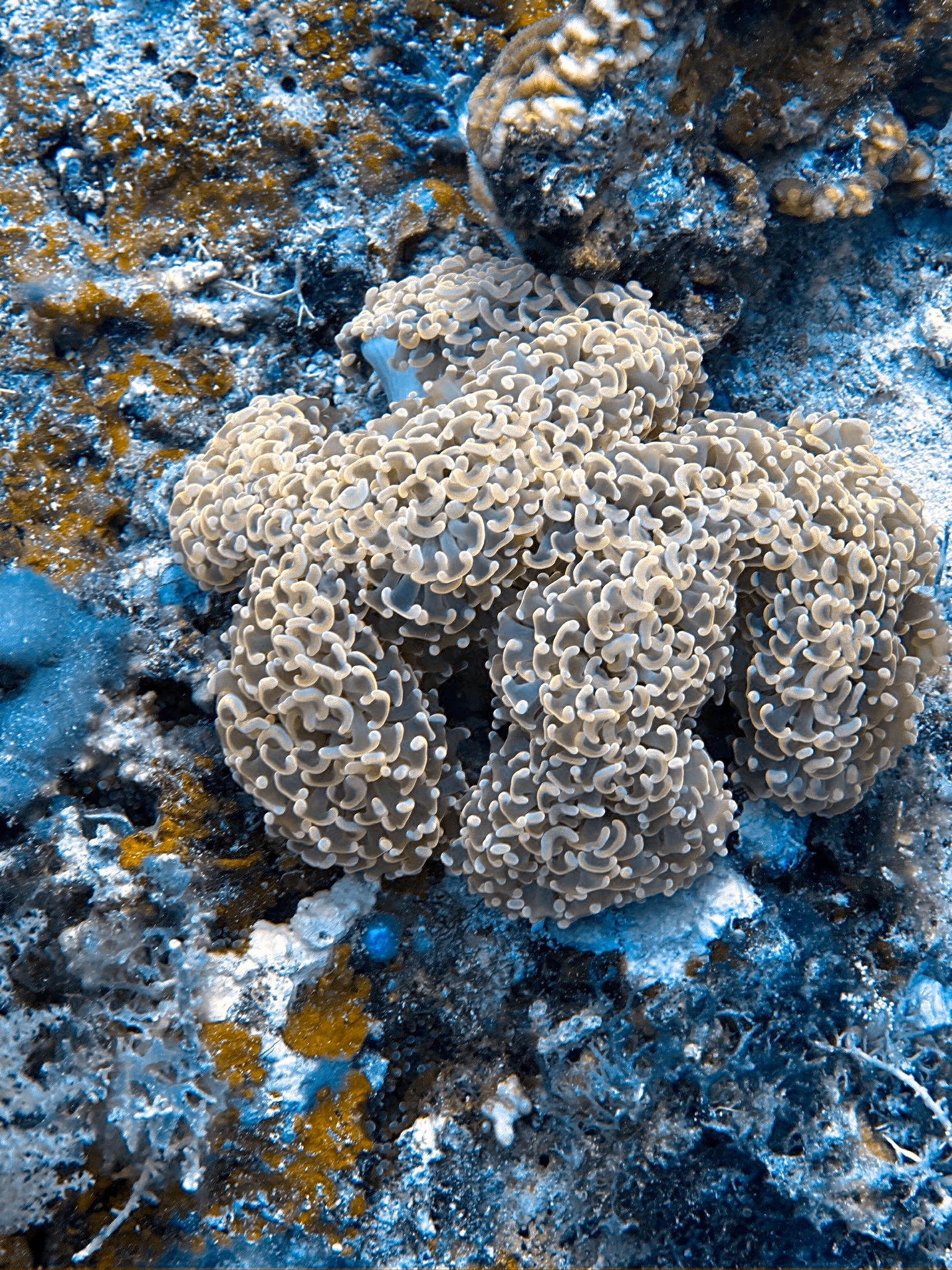
The terrain itself is not the attraction. The top of the shoal is a compact area of low coral outcrops on rough ground; what makes it worth a pre-dawn boat is the water above and beside it. Devil rays, eagle rays, tuna and other large sharks are reported alongside the threshers.
Kimud has been declared a Marine Protected Area and ecotourism zone by the Leyte local government, and it now carries a written rule set that materially changes who can dive it. Snorkelling and freediving are prohibited outright. Discover Scuba experiences, try dives and Open Water training dives are prohibited. Open Water divers with fewer than fifty logged dives must be accompanied by an instructor or divemaster, and Open Water and Advanced divers under fifty dives must complete a buoyancy workshop first. In the water you stay five metres from the sharks, inside the guide's designated viewing area, off the cleaning stations, with no strong lights on the animals and no reef hooks, pointers or gloves.
OW
A guide is mandatory in the water.
Boat only, about sixty minutes east of Malapascua, departing between roughly 05:00 and 08:00 to be moored on the shoal for first light. Operators ask for a valid certification and proof of logged dives before they will take you, and most want Advanced Open Water or equivalent with a minimum dive count and settled buoyancy. Nitrox is offered and commonly recommended.
Access to the site runs through a local operator.
Under the site's MPA rules, snorkelling and freediving are prohibited, as are Discover Scuba experiences, try dives and Open Water course training dives. Open Water divers with fewer than fifty logged dives must be accompanied by an instructor or divemaster, and Open Water and Advanced Open Water divers with fewer than fifty logged dives must complete a buoyancy workshop before diving the shoal. Certification and logged-dive proof are mandatory.
Kimud Shoal has been declared a Marine Protected Area and ecotourism zone by the Leyte local government, and operators now publish its rule set: keep a minimum of five metres from the sharks, hold neutral buoyancy throughout, stay within the guide's designated viewing area, never chase, touch, surround or block a shark, do not enter or interfere with a cleaning station, and keep strong lights off the animals. Reef hooks, metal sticks and pointers, and gloves - unless medically approved - are prohibited. We could not source the ordinance number, its exact date, or a published fee schedule, so those are not recorded here; ask your operator what fees currently apply.
Threshers are reported at the cleaning stations year round, in the morning window, so the dive itself has no closed season - only better and worse crossings, with January to June the calmer half. The hammerhead aggregation is the seasonal part: sources put it at the winter months of November to February, or December through April or May, with the largest schools historically towards the end of the window. It is genuinely seasonal and genuinely unreliable - Malapascua operators state that hammerheads are very occasional and never guaranteed. Plan the trip around the threshers and treat hammerheads as a bonus.
An open-water seamount an hour east of Malapascua, dived at first light. The summit is around 12 m, the plateau is variously given as 12 to 23 m, and the sides drop past 200 m. Current is steady and can be strong, and the site is commonly dived on nitrox. Water runs 26-29 C from March to December and 24-26 C in January and February. The dry season from January to June has calmer seas and more reliable crossings; from July to December the boat is cancelled more often.
On current: Operators describe the current as steady, and one lists Kimud as a strong-current, nitrox-suitable site; we take the conservative reading and record it as strong. No source publishes a visibility figure for the shoal itself, so none is recorded - the Malapascua regional range is 15-30 m and better in the dry season, but that is not a measurement of an exposed seamount at dawn. Depth: the summit is 12 m and the recorded maximum for the site is 40 m, on flanks that keep going past 200.
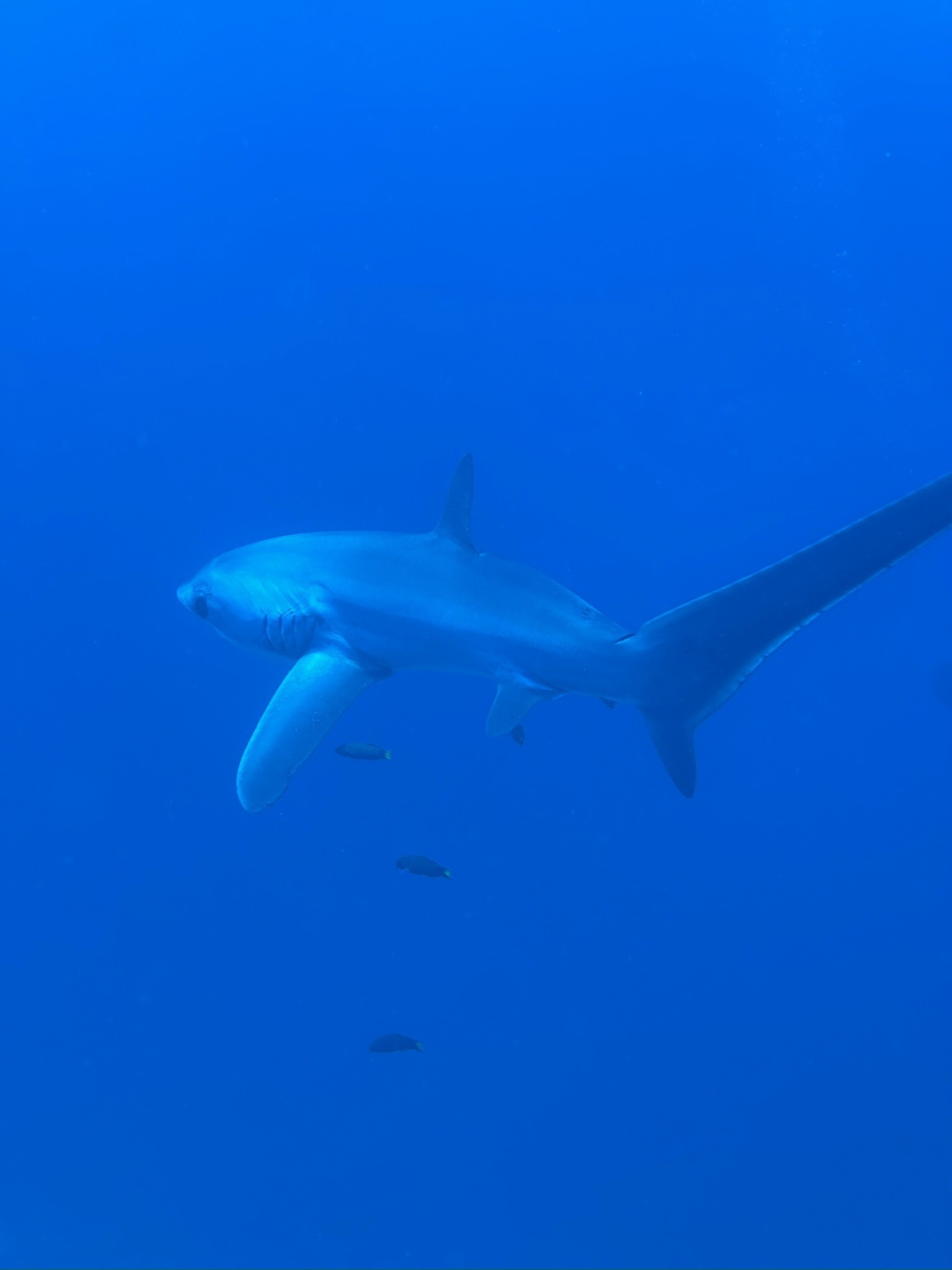
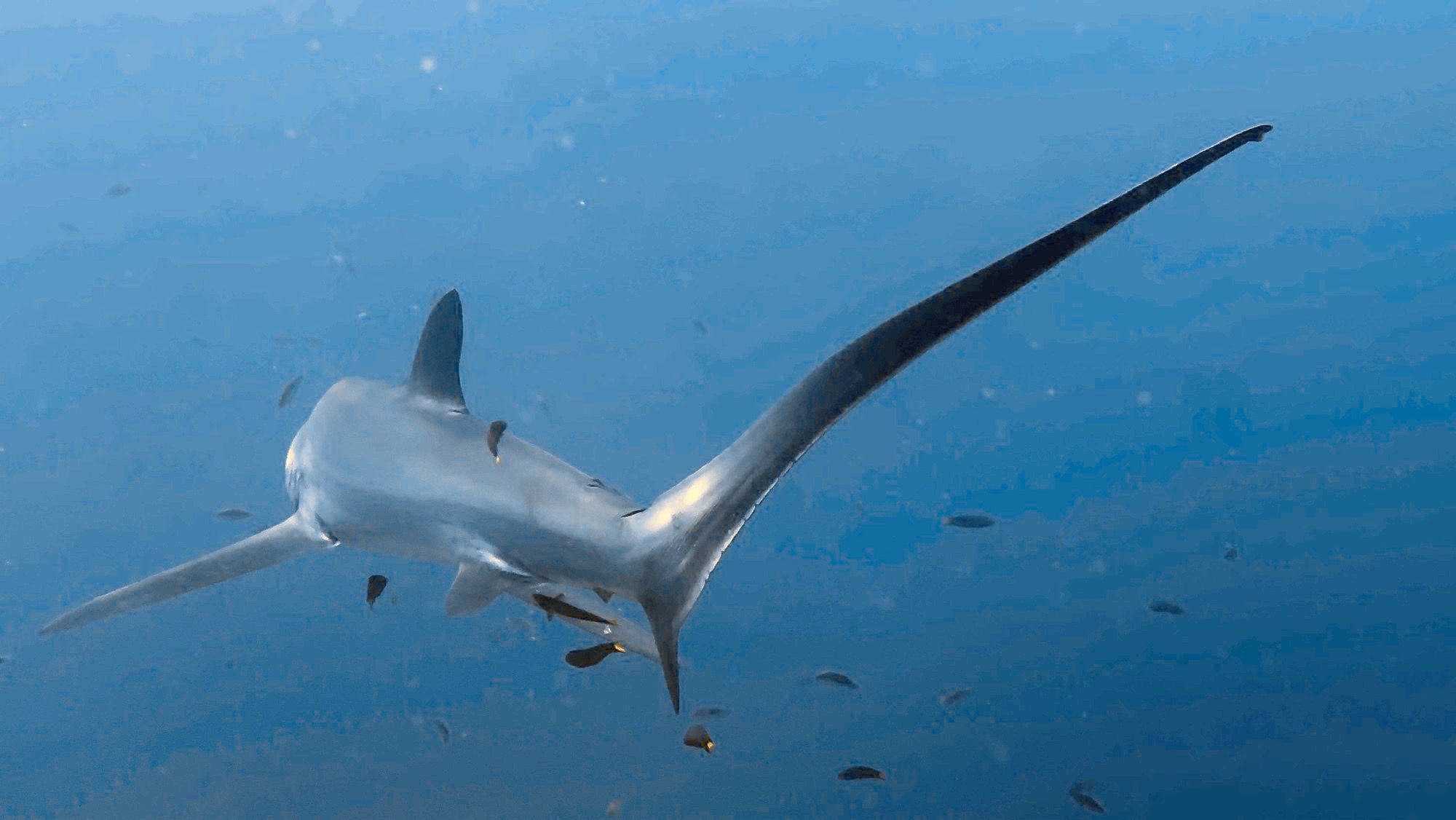
The summit of the shoal is around 12 m, with operators giving the plateau as 12 to 23 m, and the sides drop away past 200 m. The maximum depth recorded for the site is 40 m. The shallow summit is the point: the cleaning stations the sharks visit sit at about 12 m, which is why encounters here are close and unusually shallow for a shark dive.
First light. Boats leave Malapascua between roughly 05:00 and 08:00 and take about an hour, so you are moored on the shoal and descending as it gets light. That is the window when the sharks are on the cleaning stations; later in the morning they move back to deeper water.
The schooling scalloped hammerheads are a winter phenomenon. Sources put the window at November to February, or December through April or May, with the biggest schools historically towards the end of it. Be realistic: Malapascua operators now state that hammerheads are very occasional and never guaranteed and that you should not come expecting them. Book the trip for the threshers and treat a hammerhead school as luck.
Most operators ask for Advanced Open Water or equivalent with a minimum number of logged dives and good buoyancy. The site's MPA rules set the floor lower but with conditions: Open Water divers with fewer than fifty logged dives must be accompanied by an instructor or divemaster, and both Open Water and Advanced divers under fifty dives must complete a buoyancy workshop first. Certification and proof of logged dives are mandatory.
No. Snorkelling and freediving are both explicitly prohibited under the shoal's Marine Protected Area rules, along with Discover Scuba experiences, try dives and Open Water training dives. There is nothing to see from the surface in any case - the shoal top is 12 m down.
Keep at least five metres from the sharks, hold neutral buoyancy throughout, stay inside the viewing area your guide designates, and never chase, touch, surround or block an animal. Do not enter or interfere with a cleaning station, and keep strong lights off the sharks. Reef hooks, metal sticks and pointers, and gloves unless medically approved, are all banned.
Since 2022 operators report the threshers appearing at Kimud more frequently than at Monad, and the encounters at Kimud tend to be shallower and closer. Monad is still dived and still produces sightings. The trade-off is the crossing: Kimud is about an hour out against roughly thirty minutes for Monad.
Steady current, sometimes strong, on an exposed seamount with no bottom beside it, and the dive is done before sunrise on nitrox by anyone qualified for it. Water sits at 26-29 C from March to December and 24-26 C in January and February. January to June is the calmer half of the year for the crossing; July to December sees more cancellations. No source publishes a visibility figure for the shoal itself.
| Species | How often | Records |
|---|---|---|
| Alopias pelagicus | common | 120 |
| Octopus cyanea | occasional | 22 |
| Hippocampus comes | occasional | 20 |
| Hippocampus histrix | occasional | 19 |
| Hippocampus bargibanti | occasional | 17 |
| Triaenodon obesus | occasional | 17 |
| Arothron nigropunctatus | occasional | 16 |
| Arothron hispidus | occasional | 15 |
| Cirrhilabrus ryukyuensis | occasional | 15 |
| Genicanthus lamarck | occasional | 15 |
| Linckia laevigata | occasional | 14 |
| Ostracion solorense | occasional | 14 |
| Thor amboinensis | occasional | 13 |
| Cirrhitichthys falco | occasional | 12 |
| Oxycheilinus digramma | occasional | 12 |
| Nembrotha kubaryana | occasional | 11 |
| Thalassoma lunare | occasional | 11 |
| Amphiprion clarkii | occasional | 11 |
| Choriaster granulatus | occasional | 11 |
| Acanthaster planci | occasional | 10 |
| Paracirrhites forsteri | occasional | 10 |
| Delectopecten alcocki | occasional | 10 |
| Macolor macularis | occasional | 9 |
| Gymnothorax thyrsoideus | occasional | 9 |
| Phyllidia elegans | occasional | 9 |
| Dascyllus trimaculatus | occasional | 9 |
| Eurypegasus draconis | occasional | 9 |
| Echidna nebulosa | occasional | 9 |
| Apolemichthys trimaculatus | occasional | 9 |
| Arothron mappa | occasional | 8 |
| Dardanus lagopodes | occasional | 8 |
| Actinopyga echinites | occasional | 8 |
| Chaetodon lunula | occasional | 8 |
| Acanthurus pyroferus | occasional | 8 |
| Sufflamen bursa | occasional | 8 |
| Pseudanthias huchtii | occasional | 8 |
| Odontodactylus scyllarus | occasional | 7 |
| Ancylocaris brevicarpalis | occasional | 7 |
| Zanclus cornutus | occasional | 7 |
| Phyllidia ocellata | occasional | 7 |
| Diadema setosum | occasional | 7 |
| Heniochus diphreutes | occasional | 7 |
| Naso lituratus | occasional | 7 |
| Zebrasoma scopas | occasional | 7 |
| Phyllodesmium briareum | occasional | 6 |
| Ophiotreta stimulea | occasional | 6 |
| Pygoplites diacanthus | occasional | 6 |
| Dascyllus aruanus | occasional | 6 |
| Chaetodon speculum | occasional | 6 |
| Chaetodon ocellicaudus | occasional | 6 |
| Lutjanus decussatus | occasional | 6 |
| Chaetodontoplus mesoleucus | occasional | 6 |
| Calcinus pulcher | occasional | 6 |
| Phyllidia coelestis | occasional | 5 |
| Lethrinus olivaceus | occasional | 5 |
| Thelenota anax | occasional | 5 |
| Parapenaeus investigatoris | occasional | 5 |
| Trapezia tigrina | occasional | 5 |
| Trapezia cymodoce | occasional | 5 |
| Scolopsis bilineata | occasional | 5 |
A shallow seagrass-and-rubble slope minutes off Bounty Beach that Exotic has been seeding with sunken jeepneys, concrete frames and built swim-throughs.
SeaLog imports your dives from your dive computer or Apple Watch, tracks every animal you see, and keeps your logbook safe forever.
Download SeaLog