


Certification required
OW
 SeaLog
Philippines · reef · beginner
The shallow half of Balicasag's north-east drop-off: an 18 m coral plateau where turtles graze.
Royal Garden is the shallower of the two dive points on Balicasag's north-east side, about 12 km and half an hour by boat from Alona Beach on Panglao. Operators describe it as the plateau at around 18 m that skirts the island, with hard and soft corals, sandy patches and seagrass. The published working range is roughly 8 to 35 m, but the dive people come for is the plateau itself.
It is a turtle dive first. Green and hawksbill turtles graze the plants on the plateau, and operators note the difference between young turtles that keep their distance and older, larger animals that carry on feeding while divers watch. Schooling jackfish are reported here as well as on the deeper slope next door, and the macro list runs to ribbon eel, moray, nudibranchs, frogfish, robust ghost pipefish, anemonefish and several pufferfish.
Royal Garden and Black Forest share the same drop-off and are frequently sold as a pair on one boat trip. The honest distinction is depth: Royal Garden is the plateau and the coral garden, Black Forest is the slope that falls away below it to 40 m and the black coral. If you want turtles and colour in comfortable water, this is the one; if you want the deep pelagic slope, that is the other.
Access is capped. A Panglao ordinance limits Balicasag to 300 dives per day, roughly 150 divers at two dives each, allocated by an Advance Reservation System, and the 2020 carrying-capacity scheme puts 60 visitors per day on each of the five dive points.
OW
Boat only, about 30 minutes from Alona Beach. Booked through a Panglao dive centre, which files a Comprehensive Dive Reservation Form with your name, certification level and nationality plus a copy of your certification. Reservations open three months ahead and are frequently full a day or two before the dive.
Access to the site runs through a local operator.
Balicasag is capped at 300 dives per day, about 150 divers, with a maximum of two dives per diver per day, shared between all operators first come first served through the Advance Reservation System. Each of the five dive points additionally takes 60 visitors per day under the 2020 carrying-capacity scheme. Island-hopping and snorkelling boats must depart from the Panglao jetty port; diving is exempt from the gateway rule but not from the cap.
Balicasag is a marine sanctuary. Operators publish an environmental user fee of PHP 250 per diver per day plus a PHP 300 daily mooring fee shared across the boat; confirm the current figures with your centre, since these are operator-published rather than ordinance text. We could not source a written rule making an in-water guide compulsory, so that is left unanswered; in practice every Panglao operator dives it guided.
January to May is the dry season, with the calmest crossing and the best visibility. May to October still dives well. Avoid Christmas, New Year and Easter - the daily dive cap is fixed, so peak weeks just mean the reservation system is full.
A coral plateau at about 18 m on the north-east side of an exposed island, reached by day boat from Panglao. Sandy patches, seagrass and hard and soft coral, with the plateau edge falling away to the deeper slope. Balicasag-wide visibility figures are 15-30 m in the dry season and 10-20 m in the rains; water runs about 26-27 C from January to March and up to 29 C later. Nothing is published about current at this site specifically.
On current: No source publishes a current figure for Royal Garden specifically. The regional guidance is that currents can be strong at island sites like Balicasag, which is context rather than a measurement of this plateau, so no current ordinal is recorded. Visibility is published for Balicasag as a whole - 15-30 m in the January-May dry season and 10-20 m in the rains - but not for this site, so no figure is recorded either.
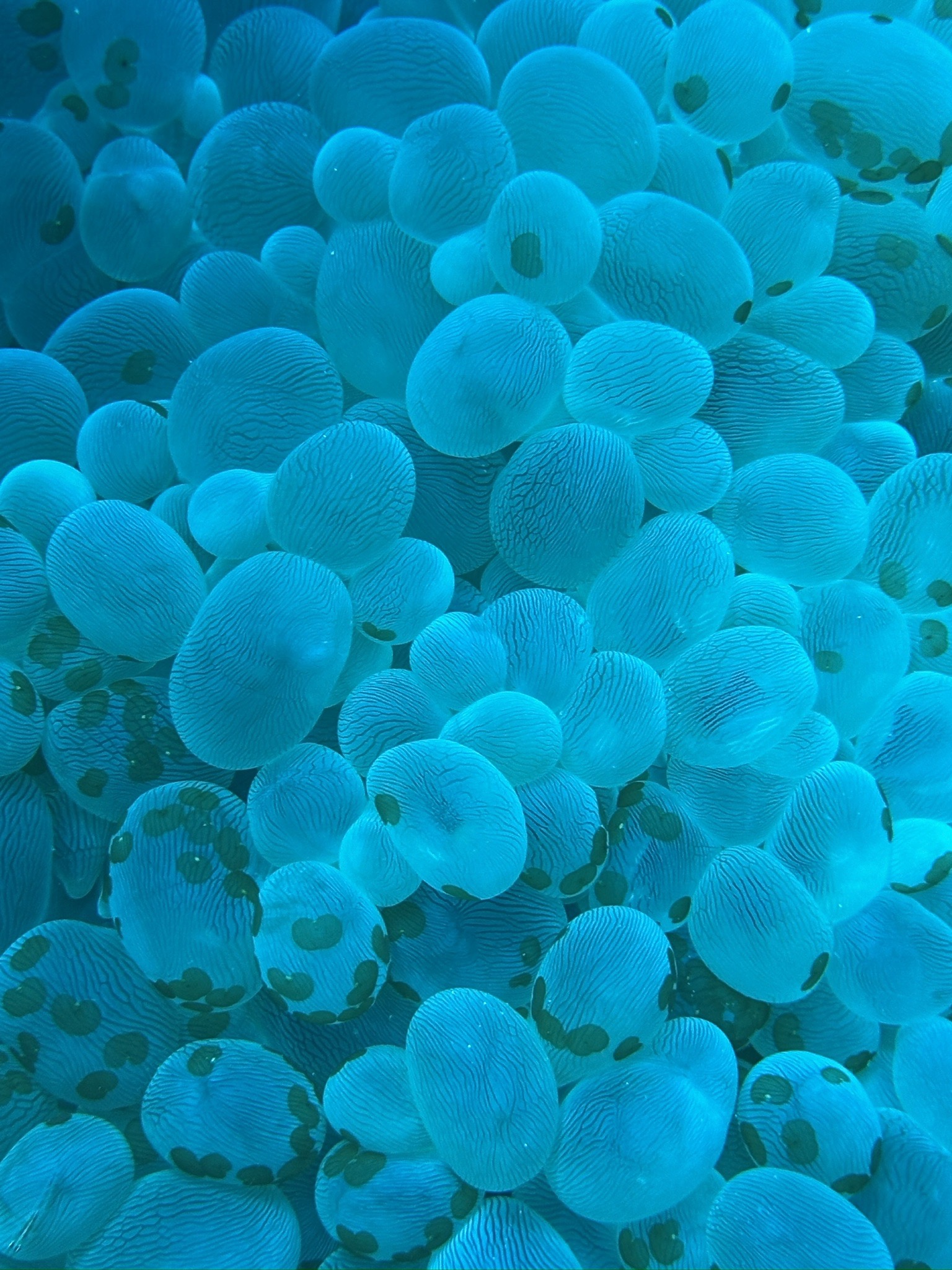
The dive is the plateau at about 18 m that wraps Balicasag's north-east side. Operators publish a full working range of roughly 8 to 35 m, but most of the dive is spent on the plateau itself.
Yes, it is the beginner-friendly half of the Balicasag pair - a shallow plateau with abundant coral and long bottom times. The caveat is the edge: it falls away onto the deeper Black Forest slope, so keep an eye on your depth. No source publishes a current figure for this site specifically, and currents can run at Balicasag generally, so dive it with a guide who knows the day.
It is the main reason to dive it. Green and hawksbill turtles graze the plants on the plateau. Operators note that the younger ones stay shy while the larger, older animals often keep feeding with divers nearby. Keep your distance and do not follow or touch them.
Yes. A Panglao municipal ordinance caps Balicasag at 300 dives per day, approximately 150 divers at a maximum of two dives each, allocated first come first served through an Advance Reservation System run through the dive centres. Bookings open three months ahead and are often full a day or two out.
No. Balicasag's snorkelling is at two designated sites with their own daily capacity of 200 people each, reached from the Panglao jetty port. Royal Garden is a regulated dive point and its plateau is around 18 m down.
By day boat from Alona Beach on Panglao, about 12 km and 30 minutes. There is no independent access: the dive slots are allocated to operators, so you book through a Panglao dive centre, which files your name, certification level and nationality on the reservation form.
Same drop-off, different depth. Royal Garden is the shallow coral plateau at about 18 m with the grazing turtles; Black Forest is the slope below it, running to 40 m and past, named for the black coral at 35-45 m and known for the deeper pelagic schools. Boats commonly do both on one trip.
January to May, the dry season, brings the calmest crossing and 15-30 m visibility across Balicasag. The rest of the year still dives well at 10-20 m. Christmas, New Year and Easter are the hardest weeks to get a slot because the daily cap does not move.
| Species | How often | Records |
|---|---|---|
| Nembrotha kubaryana | occasional | 33 |
| Amphiprion ocellaris | occasional | 18 |
| Amphiprion clarkii | occasional | 18 |
| Amphiprion frenatus | occasional | 17 |
| Pseudanthias huchtii | occasional | 17 |
| Dascyllus reticulatus | occasional | 16 |
| Lutjanus biguttatus | occasional | 15 |
| Zanclus cornutus | occasional | 15 |
| Nembrotha cristata | occasional | 14 |
| Didemnum molle | occasional | 14 |
| Linckia laevigata | occasional | 13 |
| Dascyllus trimaculatus | occasional | 13 |
| Thalassoma hardwicke | occasional | 12 |
| Rastrelliger kanagurta | occasional | 12 |
| Arothron nigropunctatus | occasional | 11 |
| Arothron hispidus | occasional | 11 |
| Chromodoris annae | occasional | 11 |
| Heniochus varius | occasional | 10 |
| Nembrotha chamberlaini | occasional | 10 |
| Canthigaster valentini | occasional | 10 |
| Gymnothorax thyrsoideus | occasional | 10 |
| Phyllidia elegans | occasional | 10 |
| Pygoplites diacanthus | occasional | 9 |
| Caesio caerulaurea | occasional | 9 |
| Nembrotha lineolata | occasional | 9 |
| Nembrotha milleri | occasional | 9 |
| Melichthys vidua | occasional | 8 |
| Ceratodoris nakamotoensis | occasional | 8 |
| Taenianotus triacanthus | occasional | 8 |
| Neopetrolisthes maculatus | occasional | 8 |
| Culcita novaeguineae | occasional | 8 |
| Lyrodus pedicellatus | occasional | 8 |
| Chaetodon baronessa | occasional | 7 |
| Pterois volitans | occasional | 7 |
| Dascyllus aruanus | occasional | 7 |
| Heteroconger hassi | occasional | 7 |
| Plotosus lineatus | occasional | 7 |
| Aulostomus chinensis | occasional | 7 |
| Pseudanthias tuka | occasional | 7 |
| Chaetodon kleinii | occasional | 7 |
| Halichoeres hortulanus | occasional | 7 |
| Odontodactylus scyllarus | occasional | 7 |
| Thalassoma jansenii | occasional | 7 |
| Arothron manilensis | occasional | 7 |
| Hemitaurichthys polylepis | occasional | 7 |
| Amphiprion annamensis | occasional | 7 |
| Abudefduf vaigiensis | occasional | 7 |
| Amphiprion perideraion | occasional | 7 |
| Amblyglyphidodon aureus | occasional | 7 |
| Clavelina moluccensis | occasional | 6 |
| Ostracion solorense | occasional | 6 |
| Clypeaster latissimus | occasional | 6 |
| Pearsonothuria graeffei | occasional | 6 |
| Scolopsis bilineata | occasional | 6 |
| Arothron mappa | occasional | 6 |
| Triaenodon obesus | occasional | 6 |
| Choriaster granulatus | occasional | 6 |
| Caranx sexfasciatus | occasional | 6 |
| Caranx melampygus | occasional | 6 |
| Xestospongia testudinaria | occasional | 5 |
SeaLog imports your dives from your dive computer or Apple Watch, tracks every animal you see, and keeps your logbook safe forever.
Download SeaLog