


Certification required
OW
 SeaLog
Egypt · reef · beginner
A shallow drift past a field of pinnacles that dive guides call an aquarium - and do not offer to snorkellers.
Om Halhalla (also spelled Um Halhalla) is a speedboat dive off the Marsa Alam coast, about 20 minutes from Abu Dabbab bay. The site is a main reef with a scatter of pinnacles off its north side, and the dive is run as a drift along that landscape rather than as a circuit of a single block.
Depths are modest. The operating dive centre publishes 3 to 20 m and another operator quotes 5 to 25 m with typical diving to about 17 m; we record the conservative 3 to 20 m band. The pinnacles rise through that range covered in soft and hard coral, and the site is rated easy to medium with low to medium current, open to Open Water divers. It is explicitly not offered as a snorkelling site.
The reputation is for density rather than size: guides describe it as an aquarium, with scorpionfish, nudibranchs, moray eels, wrasse of every kind, lionfish, Napoleon wrasse, turtles and triggerfish, plus schooling butterflyfish, goatfish and sweetlips, and the occasional whitetip reef shark. Our OBIS records for this stretch are dense and match: sohal surgeonfish, bluespotted ribbontail ray, sailfin tang, common lionfish, masked butterflyfish, Klunzinger's wrasse, scalefin anthias, coral hind, titan triggerfish and giant moray all appear in quantity.
OW
Speedboat or zodiac from the Marsa Alam coast, about 20 minutes from Abu Dabbab bay. No shore access and no facilities at the reef. One operator sells it as a half-day two-dive package at 130 EUR per person including transfer, tanks and weights; another sets a minimum of 12 divers.
Access to the site runs through a local operator.
A shallow drift, 3-20 m, along a main reef with pinnacles scattered off the north side. Current is rated low to medium and the dive is planned around it. Visibility is described as excellent but no figure is published, so none is recorded.
On current: Sources disagree on depth: the operating dive centre publishes 3-20 m, another operator 5-25 m with typical diving to 17 m. We record the conservative 3-20 m. Current is rated low to medium by the operating centre and medium with drifting conditions by the other; treat medium as the working assumption. Visibility is described as excellent but no figure is published, so none is recorded.
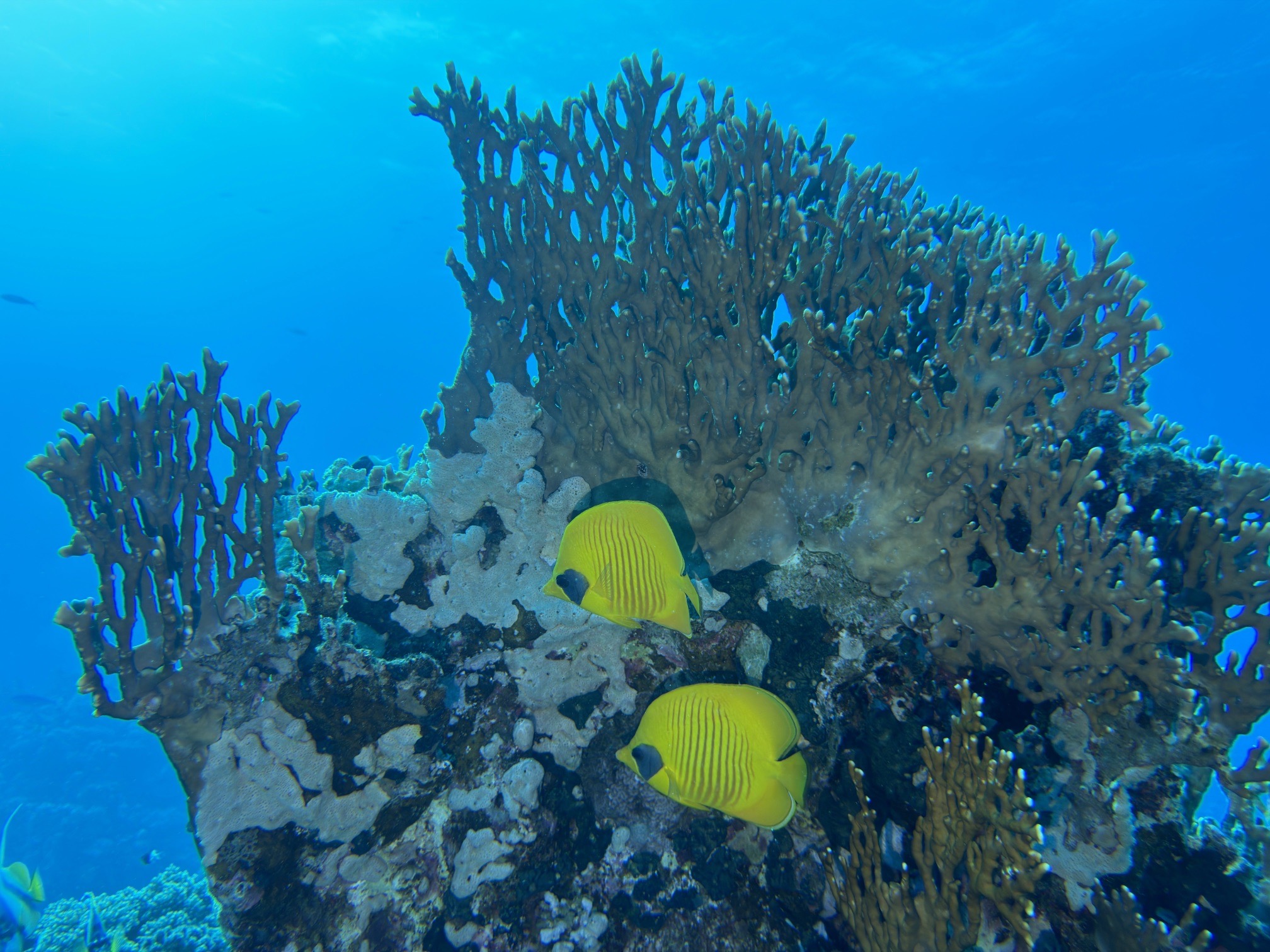
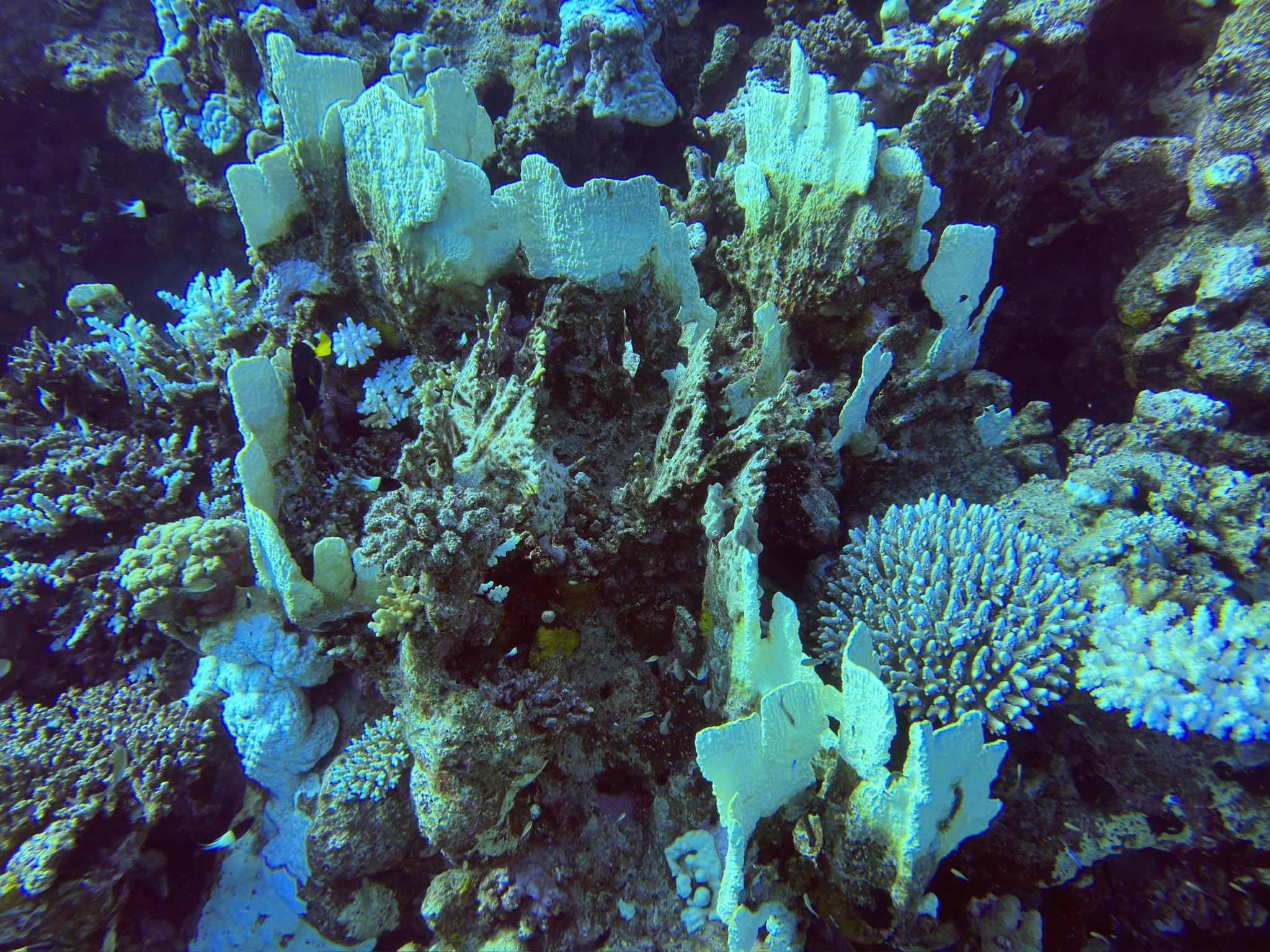
The operating dive centre publishes 3 to 20 m; another operator quotes 5 to 25 m with typical diving to about 17 m. We record the conservative 3 to 20 m. Either way it is a shallow site, which is why dives here run long.
Yes. The dive runs along the main reef and past the pinnacles scattered off its north side, with the current doing the work. Current is rated low to medium by the operating centre and medium by another operator - carry a delayed SMB for the pickup.
No. The operating dive centre says snorkelling is not recommended at this site. It is offshore, it is run as a drift, and the pinnacle field that makes it worth the trip is below breath-hold interest.
Yes - Open Water is the stated minimum and the operating centre rates it easy to medium. The shallow profile and moderate current make it a comfortable first drift dive, provided you are happy deploying an SMB or diving with a guide who will.
By speedboat or zodiac from the Marsa Alam coast, roughly 20 minutes from Abu Dabbab bay. There is no shore access and nothing at the reef. One operator sells it as a half-day, two-dive excursion at 130 EUR per person including transfer, tanks and weights.
Guides call it an aquarium: scorpionfish, nudibranchs, moray eels, wrasse of all kinds, lionfish, Napoleon wrasse, turtles and triggerfish, with schooling butterflyfish, goatfish and sweetlips, and occasional whitetip reef sharks. Our OBIS records for this stretch are dense and consistent with that - sohal surgeonfish, bluespotted ribbontail rays, sailfin tangs, anthias, coral hind, titan triggerfish and giant morays.
| Species | How often | Records |
|---|---|---|
| Acanthurus sohal | common | 305 |
| Taeniura lymma | common | 274 |
| Zebrasoma desjardinii | common | 271 |
| Pterois miles | common | 240 |
| Chaetodon semilarvatus | common | 235 |
| Thalassoma rueppellii | common | 234 |
| Pseudanthias squamipinnis | common | 233 |
| Abudefduf vaigiensis | common | 231 |
| Chlorurus sordidus | common | 231 |
| Heniochus intermedius | common | 219 |
| Paracirrhites forsteri | common | 217 |
| Arothron diadematus | common | 215 |
| Cephalopholis miniata | common | 206 |
| Rhinecanthus assasi | common | 198 |
| Naso elegans | common | 186 |
| Pygoplites diacanthus | common | 181 |
| Chaetodon fasciatus | common | 167 |
| Tridacna maxima | common | 167 |
| Amphiprion bicinctus | common | 160 |
| Balistoides viridescens | common | 158 |
| Cephalopholis argus | common | 156 |
| Gymnothorax javanicus | common | 154 |
| Diodon hystrix | common | 153 |
| Scarus niger | common | 152 |
| Arothron hispidus | common | 149 |
| Chaetodon austriacus | common | 147 |
| Fistularia commersonii | common | 144 |
| Zebrasoma xanthurum | common | 143 |
| Naso unicornis | common | 142 |
| Amblyglyphidodon indicus | common | 140 |
| Myripristis murdjan | common | 137 |
| Chaetodon auriga | common | 135 |
| Monotaxis grandoculis | common | 131 |
| Balistapus undulatus | common | 122 |
| Chaetodon paucifasciatus | common | 118 |
| Cheilinus lunulatus | common | 118 |
| Ctenochaetus striatus | common | 111 |
| Pomacentrus sulfureus | common | 109 |
| Coris aygula | common | 107 |
| Halichoeres hortulanus | common | 106 |
| Priacanthus hamrur | common | 105 |
| Dascyllus trimaculatus | common | 99 |
| Neoniphon sammara | common | 98 |
| Flavocaranx bajad | common | 96 |
| Bodianus anthioides | common | 94 |
| Oxycheilinus digramma | common | 91 |
| Scolopsis ghanam | common | 91 |
| Epibulus insidiator | common | 87 |
| Sargocentron caudimaculatum | common | 85 |
| Parapercis hexophtalma | common | 83 |
| Pycnochromis dimidiatus | common | 82 |
| Coenobita scaevola | common | 79 |
| Pseudodax moluccanus | common | 78 |
| Mulloidichthys vanicolensis | common | 78 |
| Scarus ferrugineus | occasional | 76 |
| Parupeneus forsskali | occasional | 74 |
| Variola louti | occasional | 73 |
| Cephalopholis hemistiktos | occasional | 72 |
| Chromis viridis | occasional | 71 |
| Dascyllus abudafur | occasional | 70 |
| Hemimycale arabica | occasional | 5 |
| Sargocentron spiniferum | rare | 2 |
| Hipposcarus harid | rare | 2 |
| Aetobatus ocellatus | rare | 2 |
| Crella (Grayella) cyathophora | rare | 2 |
| Parupeneus cyclostomus | rare | 2 |
| Platax orbicularis | rare | 2 |
| Acanthaster benziei | rare | 2 |
| Aluterus scriptus | rare | 1 |
| Fromia ghardaqana | rare | 1 |
| Stenopus hispidus | rare | 1 |
| Himantura uarnak | rare | 1 |
| Theonella swinhoei | rare | 1 |
| Acanthurus nigrofuscus | rare | 1 |
| Lutjanus bohar | rare | 1 |
| Plectorhinchus gaterinus | rare | 1 |
| Malacanthus latovittatus | rare | 1 |
| Triaenodon obesus | rare | 1 |
| Plagiotremus tapeinosoma | rare | 1 |
| Pseudochromis fridmani | rare | 1 |
| Urogymnus asperrimus | rare | 1 |
| Ophiocoma scolopendrina | rare | 1 |
| Lambis lambis | rare | 1 |
| Millepora dichotoma | rare | 1 |
| Lutjanus monostigma | rare | 1 |
| Rastrelliger kanagurta | rare | 1 |
| Tridacna squamosa | rare | 1 |
| Pedum spondyloideum | rare | 1 |
| Linckia multifora | rare | 1 |
| Bodianus diana | rare | 1 |
| Gnathanodon speciosus | rare | 1 |
A small patch reef a six-minute zodiac hop off the Equinox beach, with block tops two metres under the surface.
A 900 m resort fringing reef worked from the beach: a guide rope south to the blocks by the jetty, a zodiac drop for the better northern half, and a seagrass meadow in the middle of the bay.
The coral garden inside the dugong bay: shore entry, blocks from 2 m down, and a seagrass meadow you are not allowed to kneel on.
Reef one of the Abu Dabbab chain: a coral garden on sand with a shallow canyon, and the one of the group operators sell least.
The second of six numbered reefs a few kilometres off the Marsa Alam coast, dived with number three as a single shallow speedboat dive.
The southern house reef of the Abu Dabab seagrass bay - the same bay as our Marsa Abu Dabab and Abu Dabab Garden records, under a third name.
SeaLog imports your dives from your dive computer or Apple Watch, tracks every animal you see, and keeps your logbook safe forever.
Download SeaLog