


Certification required
OW
 SeaLog
Egypt · reef · beginner
One of the few Egyptian reefs you may dive unguided, as often as you like, straight off the beach.
Marsa Shagra is a sandy-bottomed bay about 25 km north of Marsa Alam, fringed by a north and a south reef that close in to form a natural lagoon. The house reef of Red Sea Diving Safari's Shagra Village runs from the beach: a sheltered entry point drops you straight onto the reef, and zodiacs run in daylight hours to reach the outer parts of the system, which extends roughly 2 km north and south of the bay.
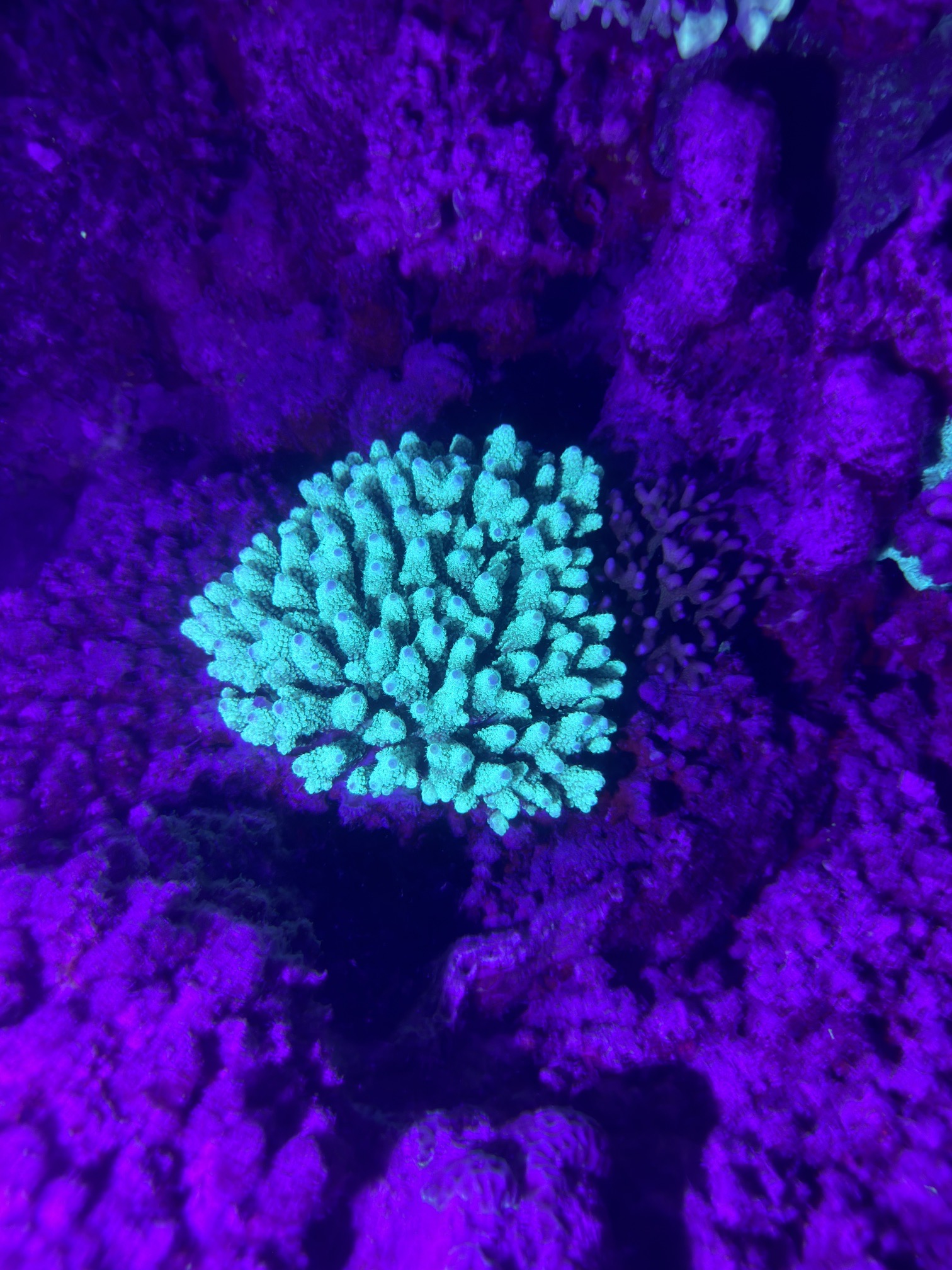
The profile is gentle at the head of the bay, roughly 1 to 10 m over sand and coral, and steepens toward the outer walls of the two arms. Sources put the outer drop-off at 40 m and beyond; we record the conservative figure. The camp has treated the bay as a protected area for about two decades and caps the number of divers at what the reef tolerates, which is why the coral cover here is usually described as unusually intact for an accessible Egyptian house reef.
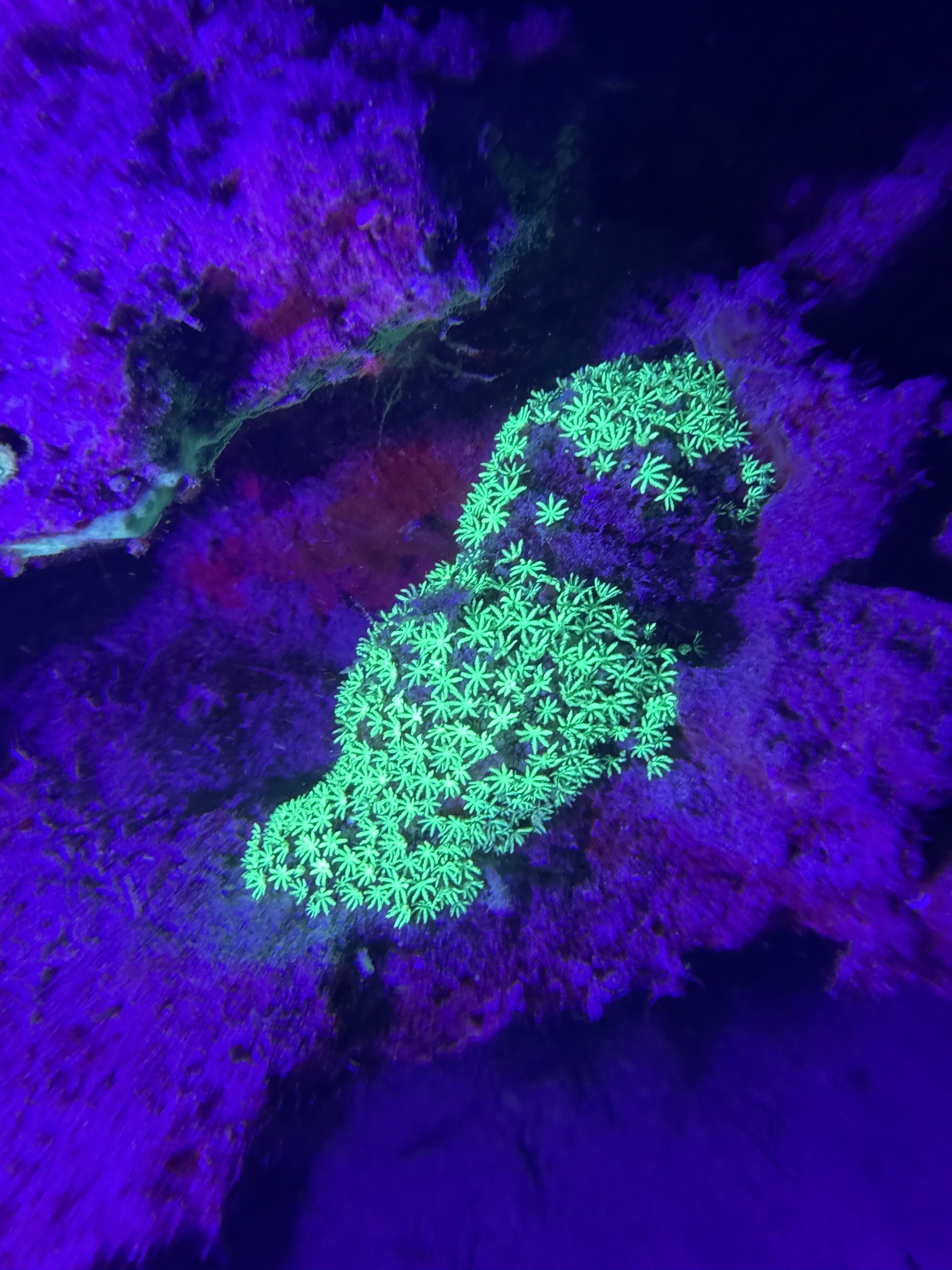
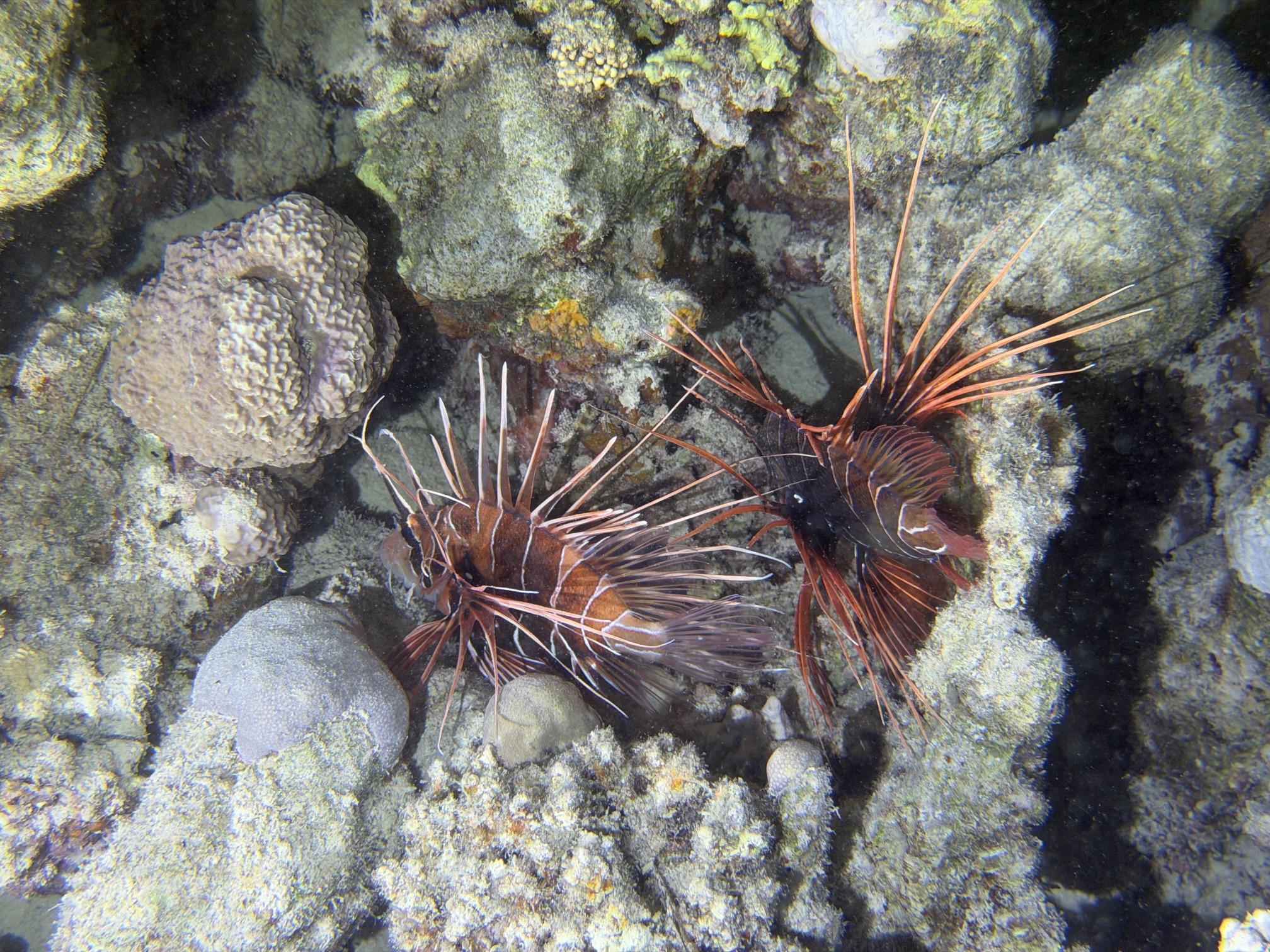
OBIS records for this bay are dense and read as a textbook northern Red Sea reef community: sohal surgeonfish, bluespotted ribbontail ray, sailfin tang, common lionfish, Klunzinger's wrasse, masked butterflyfish, coral hind, Picasso triggerfish, royal angelfish, titan triggerfish and giant moray all appear in quantity. Dive-centre accounts add occasional pelagic visitors to the bay including dolphins, and dugong and manta are reported but not routine.
Certified divers may dive the house reef unguided and without limit on the number of dives, within their own certification, which makes this one of the few Egyptian sites where the dive plan is entirely the diver's own responsibility.
OW
You may dive this site unguided.
Shore entry from the beach of Red Sea Diving Safari's Shagra Village; access to the bay is through the camp, so you need to be a guest or a booked diver. Once in, no guide is required. Zodiacs run in daylight hours to the outer parts of the system, about 2 km north and south. Full village facilities: accommodation, dive base, gas fills, courses.
Access to the site runs through a local operator.
Two dives on the first day are run as orientation dives on the house reef; excursions start from day two. A PADI ReActivate refresher is required for divers who have not dived in the last 12 months, divers crossing over from another agency, or anyone the instructor judges needs one on the orientation dive. Diving is not guaranteed without a prior booking.
Red Sea Diving Safari charges a mandatory environmental fee of EUR 10 per stay and a hyperbaric-chamber support contribution of EUR 7 for foreign guests (210 LE for Egyptians and residents), effective 7 January 2025. The separate national-park tickets published on the same list - EUR 19 for Shaab Samadai and EUR 11 for Marsa Abu Dabab bay - apply to those excursions, not to diving the Shagra house reef.
Divable year round; the bay's shelter means it is one of the sites that survives a windy day on the Marsa Alam coast. No published month-by-month baseline for this specific bay, so no peak season is claimed.
A sheltered bay: the two fringing arms close in around a sandy-bottomed lagoon, so the head of the bay is calm and the reef top is shallow and sunlit. No reliable published figure exists for current strength or typical visibility here, so neither is recorded. Conditions get more exposed as you work out toward the walls of the two arms.
On current: Sources disagree on the outer depth: ZuBlu describes the bay at 1-10 m dropping to 40-50 m at the outside walls, while Red Sea Diving Safari states depths exceeding 40 m at the fringing reef. We record the conservative 40 m. No reliable published figure for current strength or typical visibility, so both are left unrecorded; the bay itself is sheltered.
Yes, and that is what the site is known for. Certified divers may dive the house reef unguided and with no limit on the number of dives, within their own certification. The dive plan, depth and gas management are entirely your responsibility, which is rare in Egypt and worth taking seriously.
The head of the bay runs about 1 to 10 m over sand and coral. The outer walls of the two arms drop past 40 m, with one source describing 40-50 m and the operator stating depths exceeding 40 m; we record the conservative 40 m. Nothing forces you deep - the shallow lagoon is a complete dive on its own.
Walk in from the beach at Shagra Village onto a sheltered entry that drops you straight on the reef. To reach the outer parts of the system, which run roughly 2 km north and south of the bay, zodiacs run during daylight hours. Access to the bay is through the camp.
Yes for the bay itself: shallow, sheltered and reached on foot. Two orientation dives are run on the house reef on the first day before excursions start. A PADI ReActivate refresher is required if you have not dived in the last 12 months or are crossing over from another agency.
Both. The lagoon between the two reef arms is 1-10 m with a sandy floor and a sheltered beach entry, which suits snorkelling well. For freediving, the camp runs a dedicated house-reef zodiac for free divers. Keep clear of the bay mouth where boats cross.
A dense, textbook northern Red Sea reef community: sohal surgeonfish, bluespotted ribbontail ray, sailfin tang, common lionfish, Klunzinger's wrasse, masked butterflyfish, coral hind, Picasso triggerfish, royal angelfish, titan triggerfish and giant moray all show up in quantity in the occurrence record. Dolphins visit the bay occasionally; dugong and manta are reported but are not something to plan a trip around.
The camp charges a mandatory environmental fee of EUR 10 per stay plus a EUR 7 hyperbaric-chamber support contribution for foreign guests, effective 7 January 2025. Those are stay fees, not house-reef permits. The separate national-park tickets, EUR 19 for Shaab Samadai and EUR 11 for Marsa Abu Dabab bay, only apply if you take those excursions.
Better than the regional average. The camp has managed the bay as a protected area for around two decades and caps diver numbers, and the reef is usually described as unusually intact for an accessible Egyptian house reef. Regionally, HEPCA's Bleach Watch survey of the 2024 marine heatwave found bleaching increasing from north to south along the Egyptian coast, with preliminary 2025 recovery of 75-88 percent, so treat the reef as recovering rather than untouched.
| Species | How often | Records |
|---|---|---|
| Acanthurus sohal | common | 315 |
| Taeniura lymma | common | 288 |
| Zebrasoma desjardinii | common | 280 |
| Pterois miles | common | 262 |
| Thalassoma rueppellii | common | 239 |
| Chlorurus sordidus | common | 235 |
| Chaetodon semilarvatus | common | 235 |
| Abudefduf vaigiensis | common | 234 |
| Arothron diadematus | common | 230 |
| Pseudanthias squamipinnis | common | 230 |
| Paracirrhites forsteri | common | 225 |
| Heniochus intermedius | common | 222 |
| Cephalopholis miniata | common | 204 |
| Rhinecanthus assasi | common | 202 |
| Pygoplites diacanthus | common | 186 |
| Naso elegans | common | 185 |
| Chaetodon fasciatus | common | 169 |
| Tridacna maxima | common | 168 |
| Balistoides viridescens | common | 162 |
| Arothron hispidus | common | 162 |
| Amphiprion bicinctus | common | 161 |
| Diodon hystrix | common | 157 |
| Scarus niger | common | 154 |
| Cephalopholis argus | common | 153 |
| Gymnothorax javanicus | common | 149 |
| Chaetodon austriacus | common | 149 |
| Zebrasoma xanthurum | common | 146 |
| Fistularia commersonii | common | 145 |
| Naso unicornis | common | 144 |
| Chaetodon auriga | common | 142 |
| Amblyglyphidodon indicus | common | 137 |
| Myripristis murdjan | common | 136 |
| Monotaxis grandoculis | common | 132 |
| Balistapus undulatus | common | 122 |
| Chaetodon paucifasciatus | common | 121 |
| Cheilinus lunulatus | common | 118 |
| Pomacentrus sulfureus | common | 114 |
| Ctenochaetus striatus | common | 113 |
| Halichoeres hortulanus | common | 110 |
| Coris aygula | common | 109 |
| Neoniphon sammara | common | 104 |
| Dascyllus trimaculatus | common | 102 |
| Priacanthus hamrur | common | 100 |
| Bodianus anthioides | common | 96 |
| Scolopsis ghanam | common | 94 |
| Flavocaranx bajad | common | 93 |
| Oxycheilinus digramma | common | 89 |
| Epibulus insidiator | common | 86 |
| Sargocentron caudimaculatum | common | 85 |
| Parapercis hexophtalma | common | 85 |
| Dascyllus abudafur | common | 83 |
| Pycnochromis dimidiatus | common | 83 |
| Pseudodax moluccanus | common | 82 |
| Scarus ferrugineus | occasional | 77 |
| Chromis viridis | occasional | 77 |
| Variola louti | occasional | 77 |
| Parupeneus forsskali | occasional | 77 |
| Mulloidichthys vanicolensis | occasional | 77 |
| Ostracion cubicum | occasional | 72 |
| Rastrelliger kanagurta | occasional | 72 |
A shallow coral garden on the fringing reef in front of the Abo Nawas resort, dived from its jetty or drifted from a speedboat out of Gabal el Rosas.
A named wall on the reef just north of Marsa Shagra that operators run regularly and nobody publishes numbers for.
The outer northern reef at the mouth of Marsa Gabal el Rosas, named for the anemone colony on its 22 m plateau.
A narrow U-shaped bay 11 km from Marsa Alam, walked into from the beach, that stays divable when the wind shuts everything else.
The sixth and outermost of the numbered Sha'ab Abu Dabbab reefs, in the group a local dive guide says people rarely dive.
SeaLog imports your dives from your dive computer or Apple Watch, tracks every animal you see, and keeps your logbook safe forever.
Download SeaLog