


Certification required
OW
 SeaLog
Egypt · reef · beginner
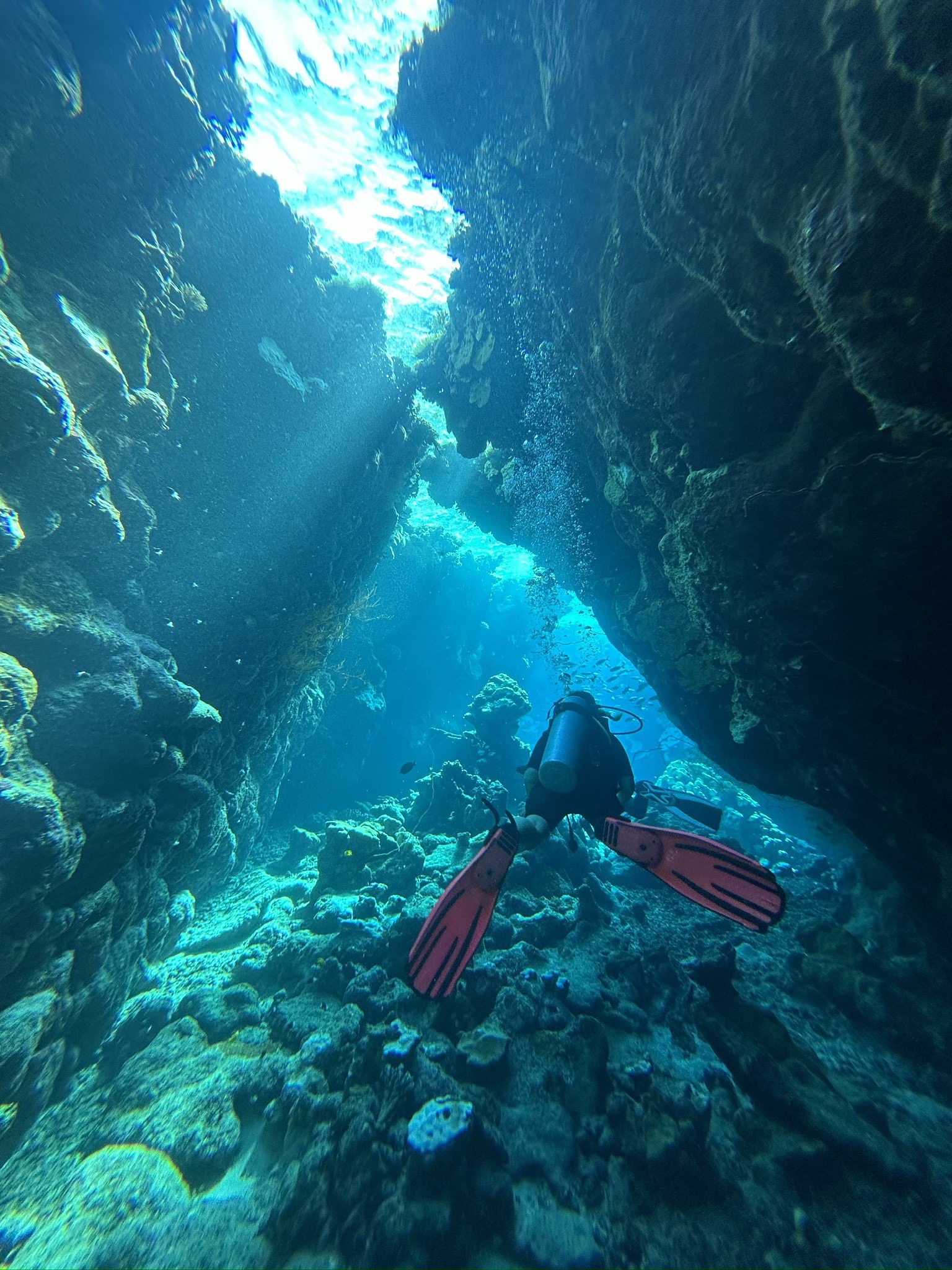
Almost certainly a duplicate catalogue entry for Abu Dabbab V: the fifth of the numbered offshore reefs, sandy slope, coral blocks, swim-throughs.
This record is very probably the same reef as our entry 'Abu Dabab V', imported from a different source. The names match, both are the fifth of the numbered Abu Dabbab reefs off Marsa Alam, and the two coordinate sets sit about two kilometres apart on the same offshore stretch - the kind of spread you get when two catalogues place the same reef from different sketches, not the kind you get from two distinct sites. We keep the facts identical rather than inventing a second reef.
Marsa Alam dive centres number a chain of offshore reefs Abu Dabbab I through VII and run them as speedboat day trips. The fifth is quiet and has little literature of its own. The described profile is a sandy slope broken by scattered coral pinnacles, with caves and swim-throughs in the coral blocks, working between roughly 3 and 25 m. Access is by speedboat and the site is offered to divers of any certification level.
Our OBIS records for this position are dense and are the standard northern Red Sea reef assemblage, effectively identical to the neighbouring Abu Dabbab reefs and to Elphinstone a few kilometres away: sohal surgeonfish, bluespotted ribbontail ray, sailfin tang, common lionfish, masked butterflyfish, bullethead parrotfish, scalefin anthias, Klunzinger's wrasse, coral hind, Picasso triggerfish and giant moray.
Green turtles are widely reported across the Abu Dabbab reefs. The dugongs the name is famous for graze the seagrass of Marsa Abu Dabab bay itself and are not to be expected at the numbered offshore reefs.
OW
Speedboat day trip from the Marsa Alam coast. No shore access and no facilities at the reef. The ticketed Marsa Abu Dabab bay - the seagrass lagoon known for dugongs and turtles - is a separate shore site and its entry fee does not apply here.
Access to the site runs through a local operator.
Sandy slope with scattered coral pinnacles between about 3 and 25 m. No current figure is published for this specific reef; the neighbouring numbered Abu Dabbab reefs are described as low to medium current, which is context rather than a measurement.
On current: No dive-centre source publishes a current figure specifically for this reef; the neighbouring Abu Dabbab reefs are described as low to medium current. Treat as unverified. Visibility is described qualitatively as good but no number is published, so none is recorded.
Almost certainly yes. Both records are the fifth of the numbered Abu Dabbab reefs off Marsa Alam, and the two coordinate sets sit about two kilometres apart on the same offshore stretch - a duplicate import from a second catalogue rather than a second reef. We have kept the facts on both pages identical rather than invent a difference.
About 3 to 25 m. The dive works a sandy slope broken by coral pinnacles, with the coral blocks and their swim-throughs in the middle of that range.
By speedboat from the Marsa Alam coast, as a day trip. There is no shore access and nothing at the reef itself.
No - that is the most common confusion about the Abu Dabbab name. The dugongs graze the seagrass of Marsa Abu Dabab bay, a shore-accessible lagoon with a paid beach entry. The numbered offshore reefs are ordinary coral dives. Green turtles, however, are widely reported across the chain.
Yes. Operators open it to any certification level and the profile is easy. The one thing that is not beginner-neutral is the swim-throughs in the coral blocks: they are short, but they are still an overhead environment.
Nobody publishes a figure for this specific reef. The neighbouring numbered Abu Dabbab reefs are described as low to medium current, which is the best available guide - treat it as context rather than a measurement and ask the boat on the day.
| Species | How often | Records |
|---|---|---|
| Acanthurus sohal | common | 306 |
| Taeniura lymma | common | 304 |
| Zebrasoma desjardinii | common | 277 |
| Pterois miles | common | 247 |
| Chaetodon semilarvatus | common | 246 |
| Chlorurus sordidus | common | 242 |
| Pseudanthias squamipinnis | common | 241 |
| Thalassoma rueppellii | common | 240 |
| Abudefduf vaigiensis | common | 239 |
| Paracirrhites forsteri | common | 227 |
| Heniochus intermedius | common | 227 |
| Arothron diadematus | common | 221 |
| Cephalopholis miniata | common | 213 |
| Rhinecanthus assasi | common | 208 |
| Naso elegans | common | 190 |
| Pygoplites diacanthus | common | 190 |
| Amphiprion bicinctus | common | 174 |
| Chaetodon fasciatus | common | 170 |
| Tridacna maxima | common | 169 |
| Balistoides viridescens | common | 165 |
| Cephalopholis argus | common | 163 |
| Gymnothorax javanicus | common | 162 |
| Diodon hystrix | common | 161 |
| Scarus niger | common | 160 |
| Fistularia commersonii | common | 156 |
| Arothron hispidus | common | 156 |
| Chaetodon austriacus | common | 154 |
| Naso unicornis | common | 150 |
| Zebrasoma xanthurum | common | 148 |
| Amblyglyphidodon indicus | common | 141 |
| Myripristis murdjan | common | 141 |
| Chaetodon auriga | common | 141 |
| Monotaxis grandoculis | common | 135 |
| Cheilinus lunulatus | common | 129 |
| Balistapus undulatus | common | 128 |
| Chaetodon paucifasciatus | common | 125 |
| Priacanthus hamrur | common | 115 |
| Ctenochaetus striatus | common | 114 |
| Pomacentrus sulfureus | common | 114 |
| Halichoeres hortulanus | common | 113 |
| Coris aygula | common | 109 |
| Dascyllus trimaculatus | common | 102 |
| Bodianus anthioides | common | 102 |
| Flavocaranx bajad | common | 102 |
| Neoniphon sammara | common | 101 |
| Scolopsis ghanam | common | 101 |
| Epibulus insidiator | common | 93 |
| Oxycheilinus digramma | common | 92 |
| Parapercis hexophtalma | common | 88 |
| Sargocentron caudimaculatum | common | 87 |
| Mulloidichthys vanicolensis | common | 85 |
| Pycnochromis dimidiatus | common | 85 |
| Pseudodax moluccanus | common | 82 |
| Coenobita scaevola | common | 79 |
| Scarus ferrugineus | common | 77 |
| Parupeneus forsskali | common | 77 |
| Chromis viridis | occasional | 76 |
| Variola louti | occasional | 75 |
| Dascyllus abudafur | occasional | 74 |
| Rastrelliger kanagurta | occasional | 73 |
Almost certainly a duplicate catalogue entry for Abu Dabab IV: the quietest of the numbered reefs, and the one with the coral cover to show for it.
The fifth of the numbered Abu Dabbab reefs: a sandy slope with coral blocks and swim-throughs, and very little written about it.
The quietest of the numbered Abu Dabbab reefs, and the one with the coral cover to show for it.
The sixth and outermost of the numbered Sha'ab Abu Dabbab reefs, in the group a local dive guide says people rarely dive.
The third and larger of the offshore Abu Dabbab reefs: two facing pinnacles, narrow tunnels on the south side, and a burnt-out liveaboard in the channel next door.
A single fissure in the reef that takes fifteen to twenty minutes to swim, opening into chambers on the way through.
SeaLog imports your dives from your dive computer or Apple Watch, tracks every animal you see, and keeps your logbook safe forever.
Download SeaLog